How AI Voice Cloning Works for Dealership Advertising
· AutoDealerAudio
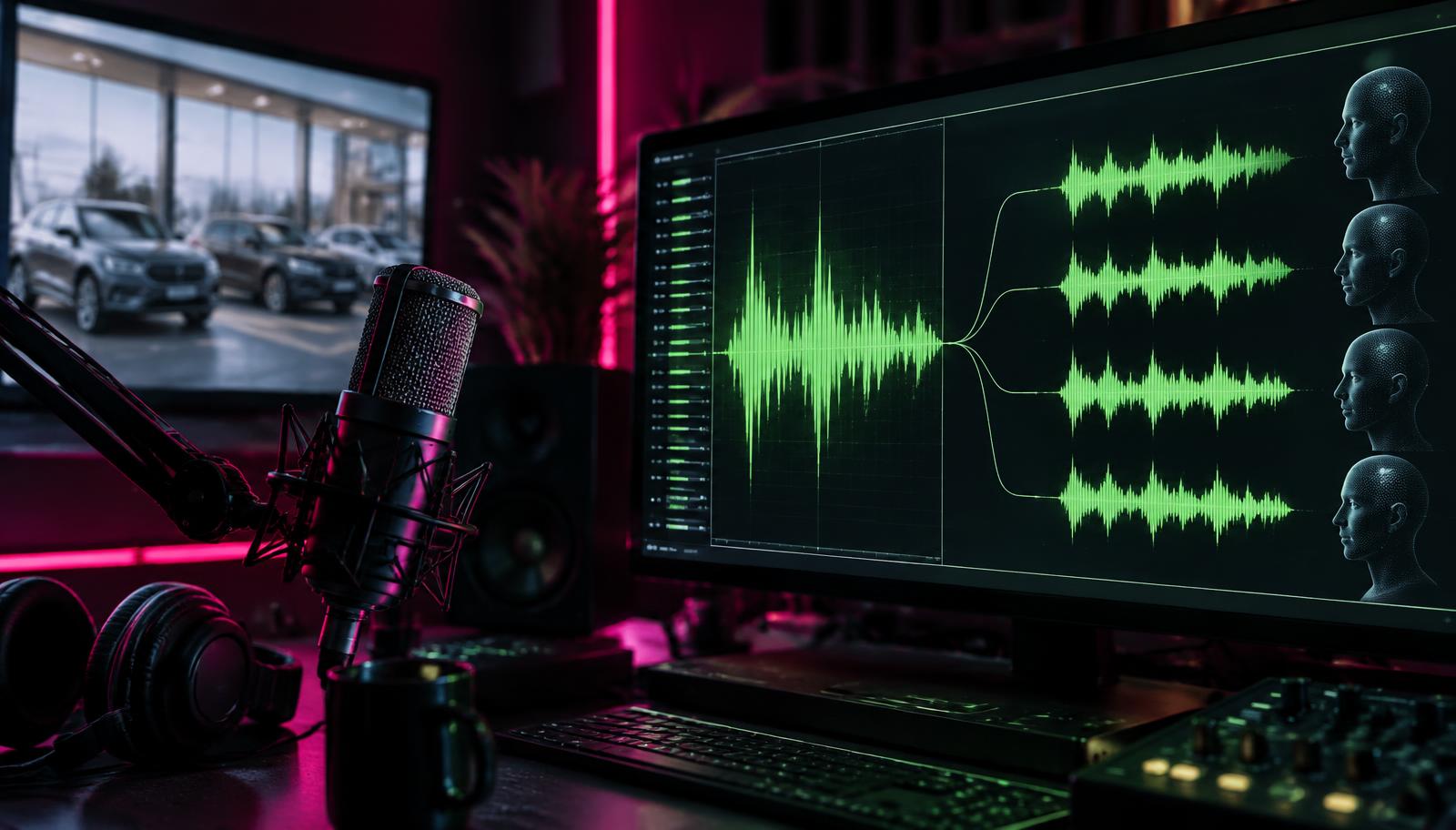
Most dealerships have an accidental voice problem. The radio station's staff announcer voices the spots. Someone at the phone vendor recorded the menu prompts years ago. The video the agency produced used whoever was on their roster that week. Three channels, three voices, no recognition built anywhere.
Voice cloning is the cheapest fix for that, because it makes one voice available everywhere without booking a session every time a script changes.
How a cloned voice is built
It starts with clean recorded samples of the voice you want — typically a professionally recorded session, not phone audio or old spots pulled off air. Source quality sets the ceiling; a cloned voice built from bad audio sounds like bad audio forever.
From there the model can read any script you send. In practice, that means a promotion change on Tuesday morning can be on your phone tree, in a radio spot, and in a video by Tuesday afternoon, all in the same voice.
Consent is not optional
We build a cloned voice only with the documented consent of the person it belongs to — a dealership owner or an employee who has agreed to it. We don't clone voices from third-party recordings, celebrity audio, or a station announcer who hasn't agreed. Beyond the legal exposure, a dealership brand is the wrong place to be careless about this.
Where cloned voices still need a human
Generated reads are convincing on straight informational copy and consistently good at pacing. They are still unreliable at emphasis — a cloned voice will stress the wrong word in a payment figure, or run past a beat that should breathe, and it doesn't know it did.
So every cloned read we deliver gets reviewed line by line, re-generated where the emphasis is wrong, and then mixed by an engineer against music and sound design at broadcast loudness. That's the same finishing pass a live human session receives; skipping it is what makes synthetic voice sound synthetic.
When to book a person instead
When the read carries genuine emotion or personality, use a human. An owner's message to the community, a charity partnership, a story about the store's history — those live or die on delivery, and a live session is worth the scheduling. We cast automotive voiceover for exactly these pieces and recommend it per project rather than defaulting either way.
The practical setup
Most stores land on a hybrid: a cloned brand voice handling monthly offer spots, phone prompts and streaming reads where consistency and speed matter most, with human sessions reserved for the pieces that carry weight. That combination is what we build into AI-assisted dealership creative and phone-tree production.