What Makes a Dealership Video Actually Drive Showroom Traffic
· AutoDealerAudio
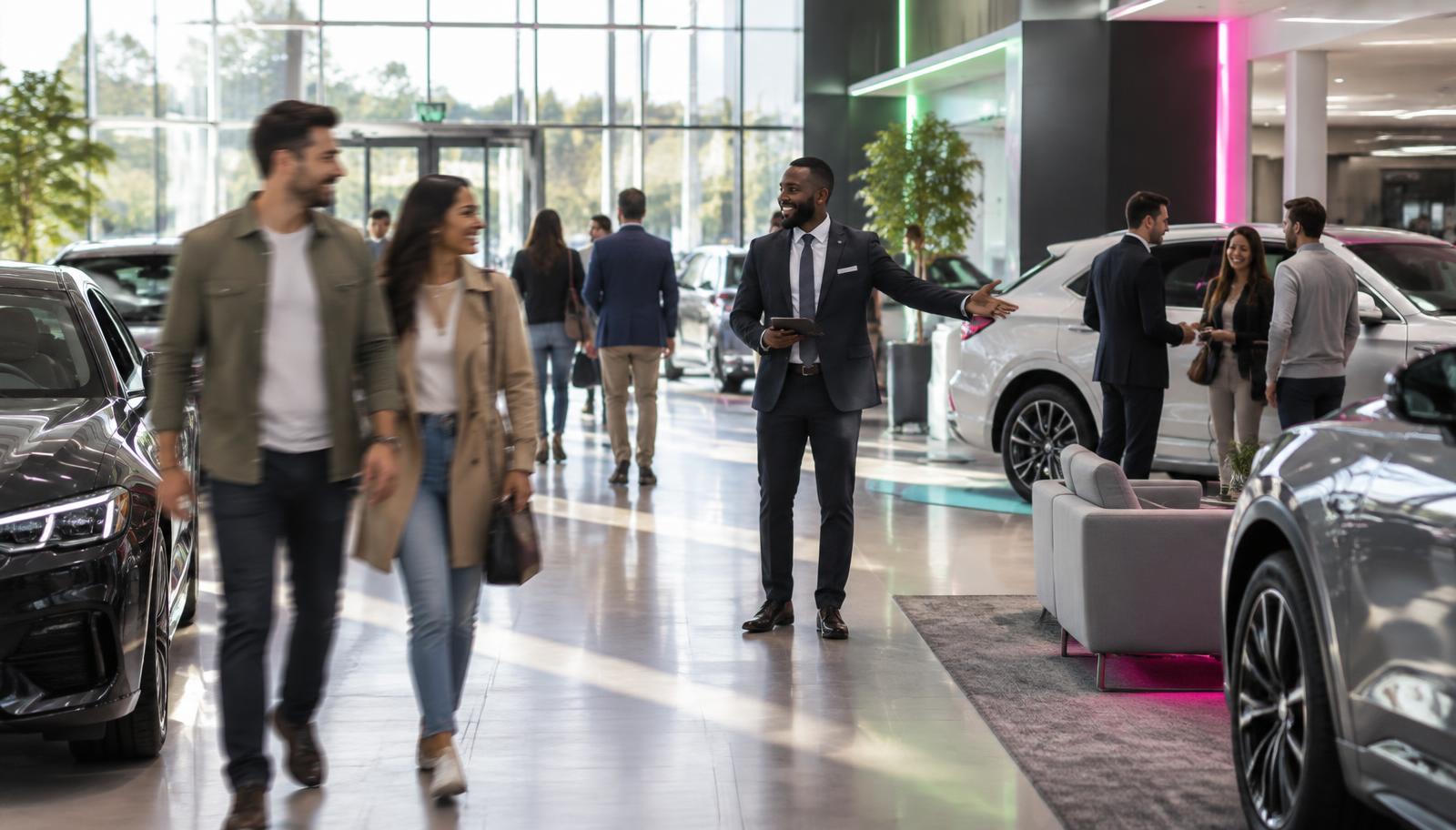
Most dealership videos fail for the same reason: they're built to look impressive rather than to make someone drive to the store this week. Drone footage over the lot, slow-motion shots of a handshake, and a montage of smiling customers can all be beautifully produced and still give a viewer no reason to act. The videos that move traffic follow a much more disciplined structure.
One offer, one deadline
The single most reliable predictor of performance is whether the video is built around one specific, time-bound offer. "Great selection and friendly service" is not an offer. "Zero down on every certified SUV through Saturday" is. Specificity gives the viewer a decision to make; generality gives them permission to keep scrolling.
Earn the first three seconds
On social and pre-roll, most of your audience decides within three seconds. Lead with the offer, a striking visual, or a direct question — not with your logo animation. Logos belong at the end, once you've given someone a reason to remember them.
Build for sound-off viewing
A large share of social video plays silently. The offer, the deadline and the store name should be legible on screen even with audio muted, while the voiceover and music carry the broadcast and connected-TV versions. This is a production decision, not a post-production patch — it's why we build the on-screen text layer into the edit from the start.
Show the dealership advantage, don't claim it
Every store says it has the best selection and the best service. Showing real inventory depth, a real service drive, real staff and real facility footage does more work than any superlative in the script — and it's the one thing a template spot produced for many advertisers can never include.
End on a single call to action
Pick one: visit the store, call the number, or go to the landing page. Three calls to action split attention and reduce response on all of them. Whatever you choose should match how you intend to measure the campaign.
Keep it consistent with everything else you run
The video should sound like your radio spots and your phone system — same voice, same music identity, same tone. When a customer hears the same sonic signature on the drive home, in a podcast break and on hold with your service department, each channel makes the others work harder. That's the argument for producing all creative in one place rather than assembling it from three vendors.
See how we build monthly video and audio together on the dealership video production page, or price it out in How Much Does a Dealership Video Commercial Cost?