Maximize Your Marketing Budget: Pairing AI Staff Cloning With Human Creative Strategy
· By Jonathan Rambo, Founder & CEO, AutoDealerAudio
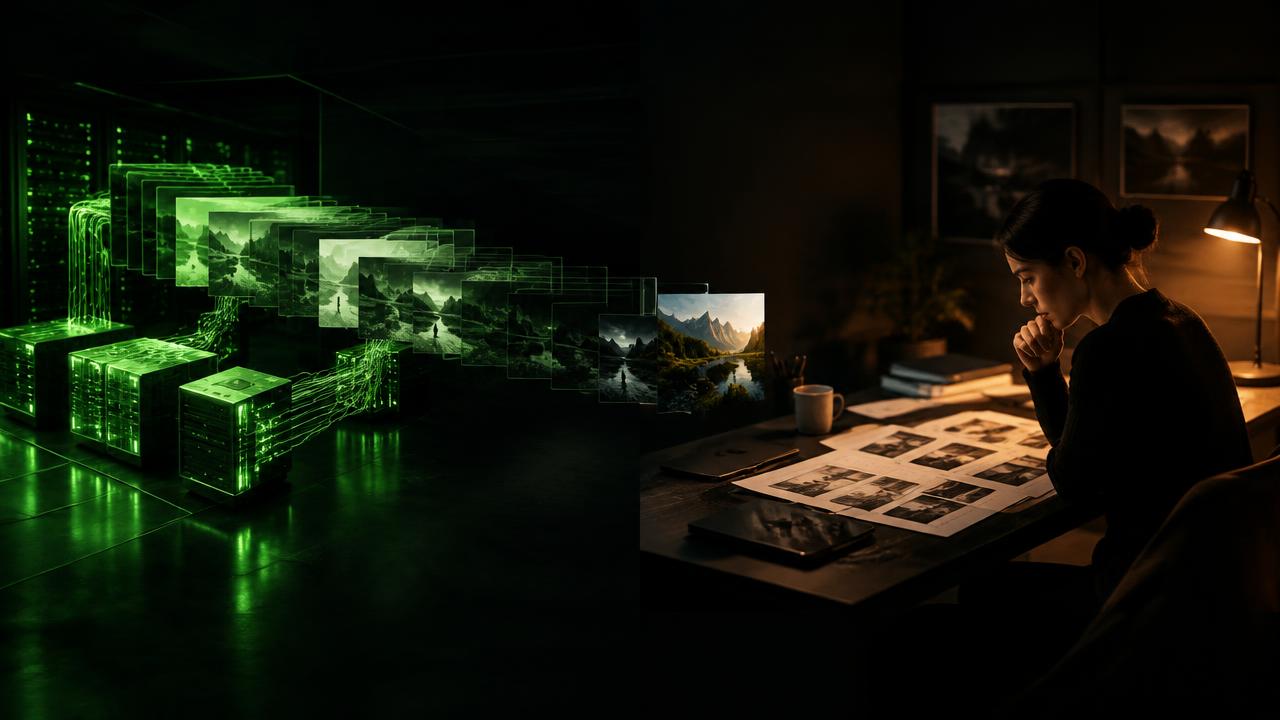
Marketing leaders face a difficult balancing act: leveraging AI for efficiency without sacrificing the creative differentiation that drives sales. Boston Consulting Group research presented at TED describes a left-brain, right-brain framework, where AI handles analytical and repeatable production while humans direct strategy and emotional resonance[1].
The failure mode at both extremes
A store that refuses AI entirely pays agency rates and waits weeks for creative it needed last Friday. A store that automates everything gets speed and volume, then discovers its advertising is indistinguishable from its competitors' — the same research describes roughly a 40% drop in creative divergence among organizations relying fully on generative tools[1].
Neither extreme is a strategy. The organizations that pull ahead are the ones that decide, deliberately, which half of the work belongs to which side.
Drawing the line
Communications researchers studying AI in advertising make the same split concrete: automate the menial production tasks, and keep human oversight over aesthetic style, emotional resonance and brand consistency[2].
For a dealership, the left-brain column is generous — script variations, generated and upscaled footage, 3D vehicle renders, cloned voice reads, resizing and exporting one campaign into a dozen platform formats. The right-brain column is short but decisive: what the offer is, who it is aimed at, how it should feel, and the final human review of the edit, the mix and every rate and expiration date that appears.
What it buys a store
The practical effect is frequency. When production is no longer gated by shoot days and booth sessions, a monthly promotional calendar can actually be met — new creative for each event rather than one spot stretched across a quarter — while the strategic decisions stay with people who understand the market.
It also extends to the small assets most stores never get around to producing, like staff portraits and sales trading cards that put the same recognizable faces on the floor as in the advertising.
Our monthly creative packages are built around this split: AI-driven production volume, human creative direction and finishing on every deliverable. For the reasoning behind using your own staff rather than synthetic performers, read why staff cloning beats generic AI avatars.