Stop Using Fake AI Actors: How Staff Voice & Likeness Cloning Builds Buyer Trust
· By Jonathan Rambo, Founder & CEO, AutoDealerAudio
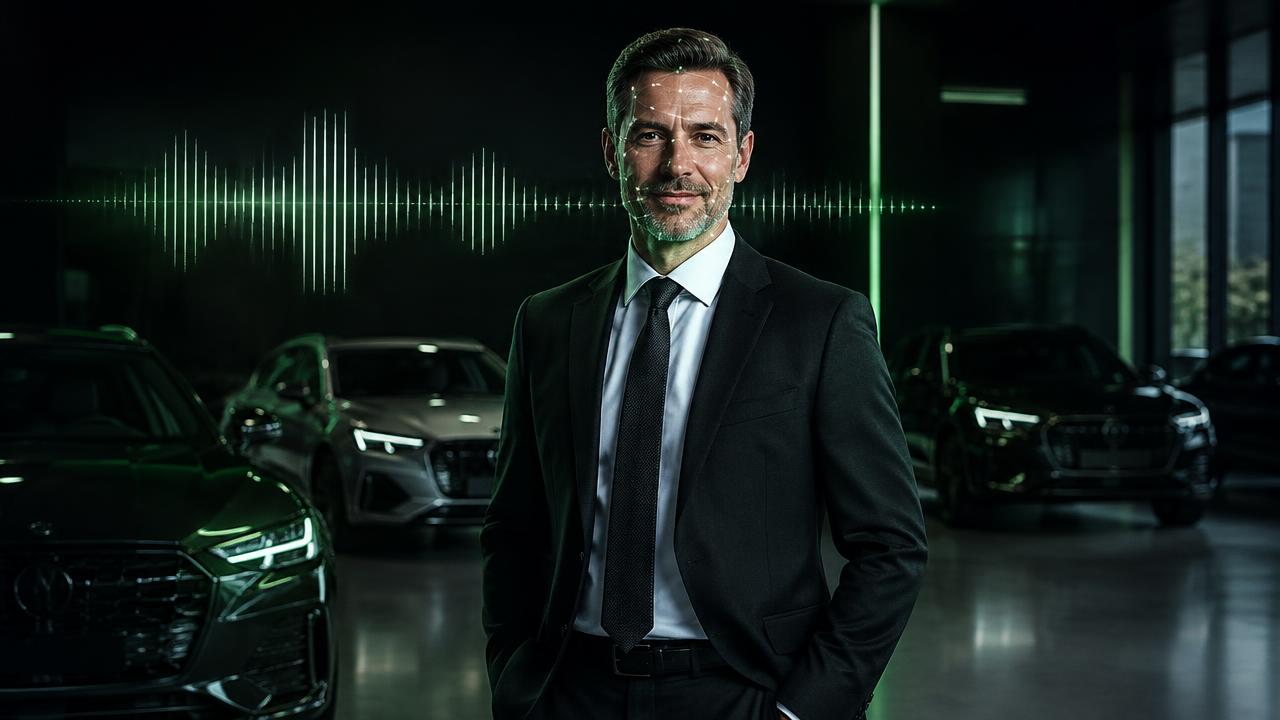
Artificial intelligence is transforming automotive advertising at breakneck speed, but a sharp divide has opened between technical efficiency and consumer trust. Research from Bentley University and Gallup reveals that 79% of Americans have recently seen advertisements created using AI. However, 49% of consumers view businesses' use of AI in advertising negatively, compared to just 19% who view it positively[1]. This skepticism peaks among younger demographics, with 66% of Gen Z and young adults aged 18 to 29 expressing negative views[1].
Consumers reject the fake performer, not the technology
Acceptance depends entirely on how the technology is deployed. While 75% of adults consider it acceptable for businesses to use AI to help employees brainstorm ideas or create early drafts, 62% reject advertisements that feature synthetic, artificially created people or voices. Among young adults, opposition to synthetic performers rises to 73%[1].
Read those two numbers together and the strategy writes itself. The public is not anti-automation. It is anti-impersonation. An AI that drafts twelve script variations before breakfast is a tool nobody objects to. An invented digital salesperson who does not exist, smiling at a camera on behalf of a real business, is the thing three out of five people say they do not want to be sold by.
Why a dealership pays the highest price for getting this wrong
Most categories can survive an anonymous presenter. Vehicle retail cannot. A car purchase is a high-consideration decision made close to home, and the deciding factor is usually whether a shopper believes they can walk back into that store in six months and be treated fairly. That belief is built on recognition — the same manager's face, the same voice, month after month, on the radio and in the feed.
An uncanny stock avatar does the opposite. It tells a shopper that the store either could not be bothered to put its own people on camera or is willing to present someone fictional as though they work there. As marketing strategist Seth Godin frames it, real marketing is not hype or short-term hustle; it is the work of telling a true story that spreads and doing work that matters for people who care[2].
The alternative: clone the people who already work there
Rather than generating fake digital actors, we clone the voice and likeness of actual dealership staff members, with their documented consent. The sales manager who has worked your floor for nine years becomes the voice of every radio spot, every phone prompt and every video — without being pulled off the floor for a recording session every time an offer changes.
That is the practical unlock. The obstacle to putting real staff in advertising was never willingness; it was logistics. Scheduling a shoot around a sales calendar is expensive and slow, which is exactly why so many stores default to a station announcer or a stock voice. Cloning removes the scheduling problem while keeping the real person.
Powered by AI, produced by humans
AI still does enormous work in our pipeline: script variations, generated and upscaled footage, rendering, and multi-format export for broadcast, social and streaming. What it does not do is finish the job. Every spot is edited, color graded, sound designed, mixed and mastered by people who produce broadcast advertising for a living, and every rate, payment and expiration date is reviewed by a human before delivery.
The result is a store that can ship broadcast-quality dealership video and radio creative in hours instead of weeks, at a fraction of agency cost, while the people on screen and on air are the same people a customer will meet when they walk in. For more on how the voice side is built, see how AI voice cloning works for dealership advertising.