AI Video Ads vs. Traditional Dealership Video Production: Cost & Quality
· AutoDealerAudio
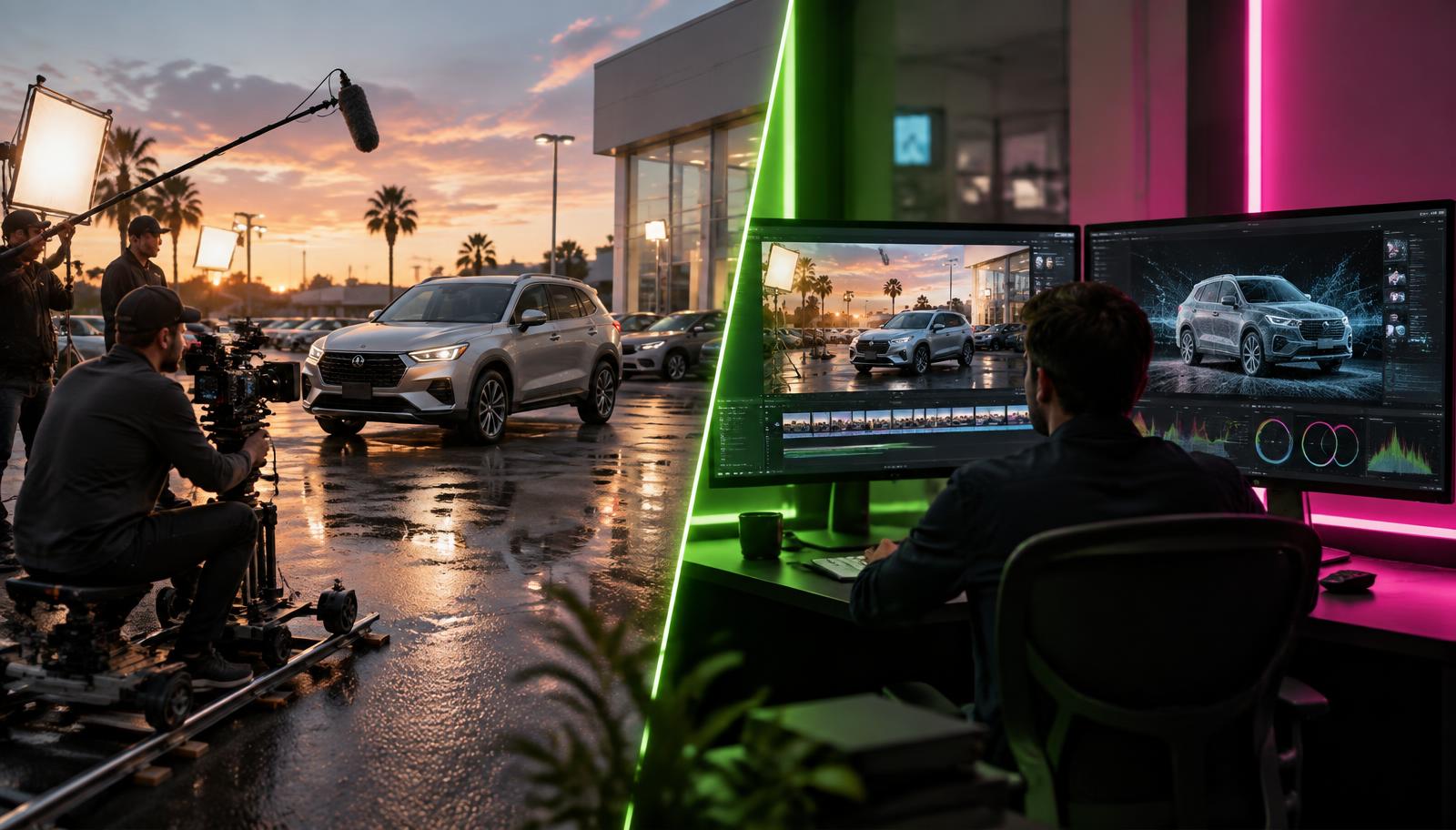
The comparison dealers usually get offered is a false one: a polished traditional production on one side, a cheap AI clip on the other. In practice the choice is narrower and more useful than that, because the two approaches differ almost entirely in how source material is created — not in how the finished ad is assembled.
Where the money actually goes
In a traditional dealership shoot, the expensive line items are the shoot day itself: crew, equipment, on-camera talent, location time, and the scheduling overhead of getting everyone on the lot at once. Post-production — editing, color grading, graphics, audio mixing — is a smaller share of the bill.
AI-assisted production removes most of the first category and keeps all of the second. That 's the entire cost story. It isn't cheaper because the finishing is skipped; it's cheaper because nobody had to block a Tuesday morning on the lot.
| Traditional shoot | AI-assisted production | |
|---|---|---|
| Typical cost driver | Crew, talent, location and shoot day | Generation plus professional finishing |
| Our pricing | Quoted per project | $995 a la carte · $1,695/mo · $2,495/mo bundled |
| Turnaround | Weeks, gated by scheduling | 72-hour guarantee from script approval |
| Creative variations | Expensive — each version is more shoot or edit time | Cheap — multiple offers and cuts from one production |
| Best for | Facility, staff, brand-story and detailed vehicle features | Monthly offers, events, rate specials, model pushes |
| Finishing work | Edit, color grade, audio mix | Edit, color grade, audio mix — identical |
Quality is decided after the footage exists
Whether a frame came out of a camera or a generator, what makes the finished spot look expensive is the same list: consistent color across every shot, cuts that land with the music, offer graphics that are legible in three seconds, and a layered audio mix where voice sits properly against the bed at broadcast loudness.
Skip that list and a traditionally shot spot looks amateur too. Do it properly and generated source material holds up on television. This is why "AI vs. real" is the wrong frame — the real variable is whether a production team finished the job.
When to still book the shoot
Film when the subject is the point. Your general manager on camera, your service lounge, a twentieth-anniversary story, a specific used unit you need shown honestly in detail — those want a camera, and no amount of generation substitutes for them.
Don't film your monthly offer spot. Incentives change faster than a production schedule, and by the time a shoot-based spot is approved and delivered, the offer it advertises is often already replaced.
The practical answer for most stores
Combine them. Use your own lot and inventory footage for hero vehicle shots, add generated material, an avatar presenter and motion graphics for everything else, and put the whole thing through one professional edit so it reads as a single production. That's what we build by default — see car dealership AI video ads for the full pipeline, or are AI dealership video ads any good for an honest look at the failure modes.