Are AI-Generated Car Dealership Video Ads Any Good?
· AutoDealerAudio
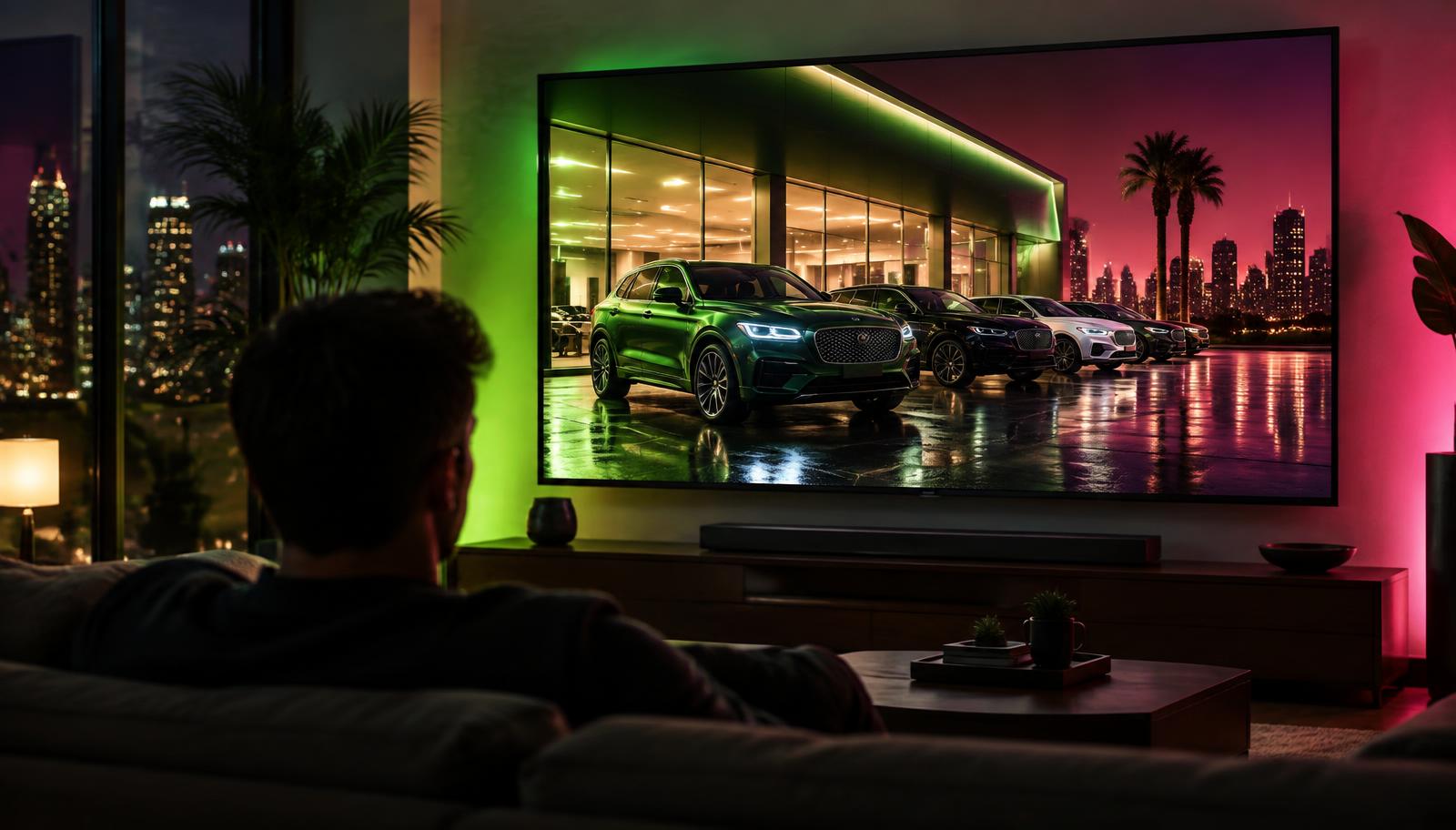
The honest answer is that "AI dealership video" describes two completely different products that happen to share a technology. One is a clip someone generated from a prompt and posted. The other is a finished commercial that used AI to build its raw material. They look nothing alike, and lumping them together is why dealers are getting wildly inconsistent results.
What AI is genuinely good at
Speed, first. Scripting, asset gathering and a first visual pass that used to take a production week now take hours. For a dealership, that changes what's possible: instead of one generic "why buy here" spot running all quarter, you can run creative built around this week's actual incentive, and change it when the incentive changes.
Volume, second. Once generation is cheap, variations stop being a budget conversation. A truck-specific cut, a service-drive cut, a Spanish-language read, a vertical version for social — all from the same production, instead of choosing one and hoping it works everywhere.
Third, consistency of presenter and voice. An avatar spokesperson and a cloned brand voice appear in every spot without scheduling anyone, which is a real advantage over hiring different talent each month.
Where it falls apart
Fine detail is still unreliable. Badges, wheel designs, grille shapes, hands, reflections in glass — these are exactly the things a car shopper looks at, and exactly what generated footage gets subtly wrong. Using a dealership's own lot and inventory footage for the hero vehicle shots, with generated material as support, solves most of this.
Factual accuracy is worse. A generation model will produce a confident, well-paced script that states a payment, an APR, or a "for a limited time" claim you never authorized. In auto retail, that's not a quality problem, it's a compliance problem. Nothing generated should reach air without a person checking every number and disclaimer against the actual offer.
And then there's finishing. Raw generated output has inconsistent color between shots, cuts that don't land on the music, and a voice track sitting on top of a bed rather than mixed into it. This is the single biggest reason AI ads read as cheap — and it has nothing to do with the AI. It's the absence of an editor, a colorist and an audio mix.
The part that decides the answer
Whether AI dealership video is "good" comes down to whether anyone did the work after generation. In our pipeline, generated footage, avatar performances, scripts and voice are treated as source material. A producer reviews every frame and line for accuracy and brand fit. Then the piece is professionally edited, color-graded, given offer graphics, and mixed as a layered multi-track audio production at broadcast loudness.
That's the version shoppers can't identify as AI — because functionally, it isn't an AI ad. It's a professionally produced dealership commercial that used AI to get to the edit faster.
How to evaluate a vendor
Ask three questions. Who reviews the generated output before it ships? Is the final piece color-graded and audio-mixed, or exported straight from the generator? And who is responsible if a stated rate or payment in the spot is wrong? A vendor that can't answer all three is selling you prompt output with a markup.
More on the economics in AI video ads vs. traditional dealership video production, and on brand voice in how AI voice cloning works for dealership advertising.